Addressing the fascinating world of reptiles, it’s important to understand their way of life, particularly their habitat and diet, to better appreciate them and contribute to their preservation. Their varied habitats, ranging from aquatic environments to forested areas, and their diet, primarily consisting of small animals, reflect their adaptability and crucial role in the balance of the ecosystem. So, dive into the life of this non-venomous snake and explore the mysteries surrounding it.
The Collar Snake: A Captivating Reptile
In the context of observing reptiles in natural environments, discussing ‘the identification of the collar snake’ is an essential aspect. With its impressive size and specific coloration, this species easily stands out from other snakes that can be encountered on our continent.
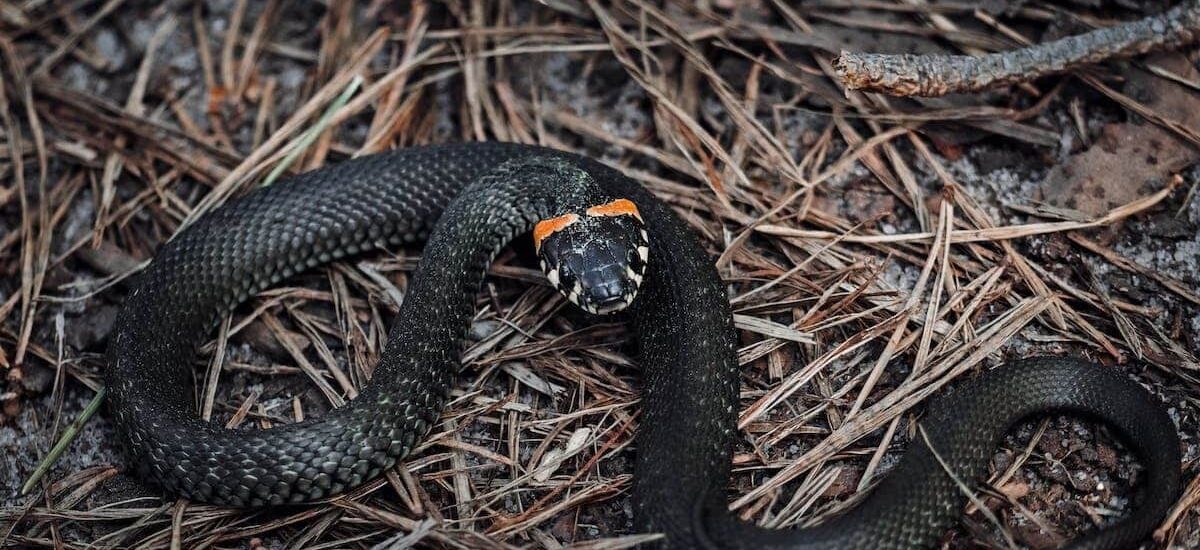
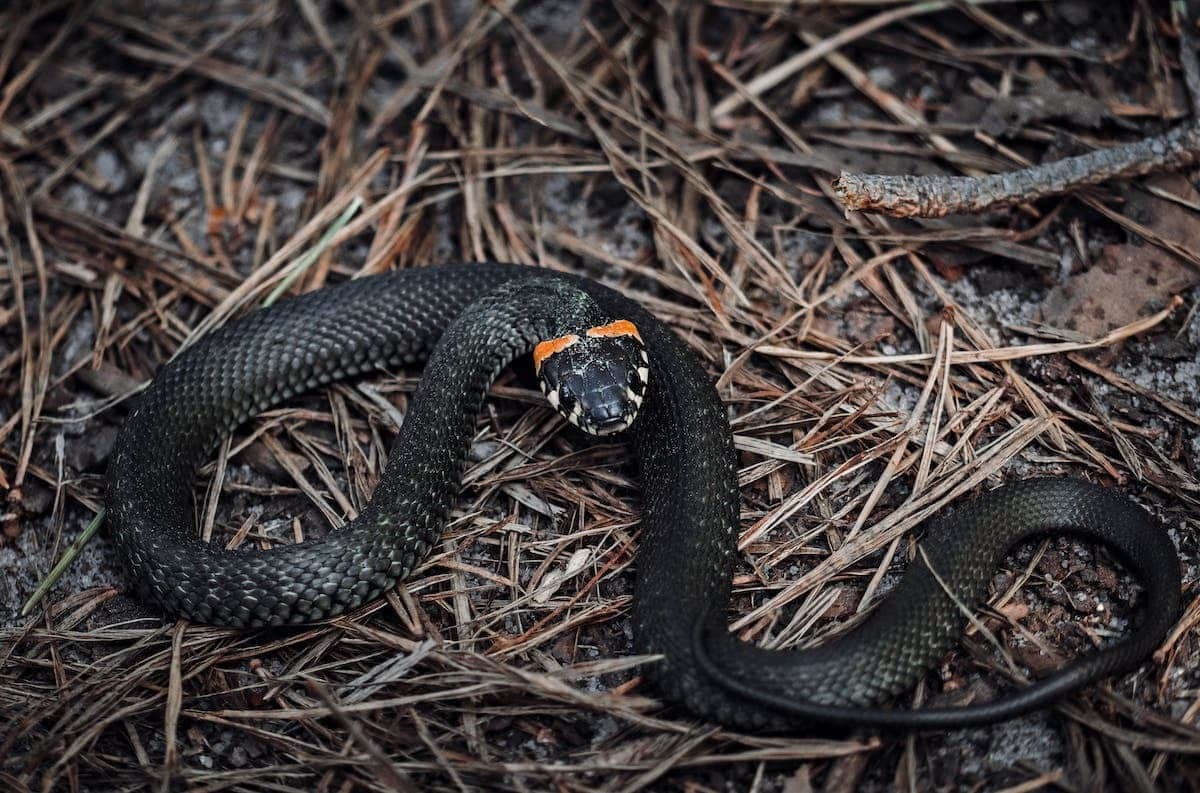
The precise identification of the collar snake involves several notable characteristics. Its back displays a color ranging from brown to olive green, but what primarily allows for its identification is the bright yellow or orange spot it bears like a collar behind its head, hence its evocative name. Its average length ranges between 60 and 100 centimeters, although it can reach up to 140 cm in some exceptional cases.
Its geographical distribution also contributes to its identification: the collar snake can indeed be found in almost all of Western Europe, including the British Isles, as well as in certain regions of North Africa.
Understanding the typical habitat of these creatures is equally important for their identification. Preferring wet areas near freshwater bodies – marshes or ponds – they can nevertheless be observed far from these, especially during their seasonal movements related to hibernation.
Their habits are also quite distinctive: exceptional swimmers, they spend a lot of time in the water where they hunt for fish and amphibians, which they particularly enjoy.
It should be mentioned that the defensive behavior unique to this species can aid in identification. When threatened, the collar snake inflates and emits a shrill hiss to scare off its attacker.
The Natural Habitat of This Amazing Snake
In its natural habitat, the collar snake particularly thrives in wet environments. It favors marshy areas, ponds, and banks of freshwater bodies where it finds an abundance of prey. It is important to highlight that this versatile species can also adapt to other environments.
Aquatic environments provide a significant advantage for the collar snake. Indeed, with its ability to swim effectively thanks to its well-developed ventral scales, it is perfectly adapted for hunting in the water. Fish and amphibians make up a significant part of its diet. The collar snake thus displays all its agility when tracking its aquatic prey.
Although it prefers to spend time near water, the collar snake can also be found in more varied habitats such as wet meadows or even at the forest edge. This adaptability allows it to extend its geographical presence beyond areas strictly related to water bodies.
When it comes to finding a suitable place to rest or hibernate during the harsh winter, the collar snake often uses underground cavities located near its usual habitat. These protected hideouts provide shelter from extreme cold and thus help ensure its survival during this critical period.
It should be noted that despite their remarkable adaptation to aquatic environments, populations of collar snakes can be threatened by the destruction of their natural habitat. The degradation of wetlands and pollution of water bodies are factors that jeopardize these magnificent snakes.
The natural habitat of the collar snake is primarily found in wet environments such as marshes, ponds, and banks of freshwater bodies. This versatile species can also adapt to other more varied environments. It is essential to preserve these habitats to ensure the survival of this fascinating animal and thus contribute to maintaining ecological balance in our aquatic ecosystems.
The Eating Habits of the Collar Snake
The collar snake has a varied and opportunistic diet, allowing it to adapt to the resources available in its environment. It primarily feeds on small vertebrates such as fish, frogs, lizards, as well as small mammals like mice and shrews.
Thanks to its elaborate hunting technique, the collar snake is capable of catching its prey with great precision. Its agility and speed are essential for effectively capturing these small creatures. When it spots a potential prey, it approaches discreetly using its ability to camouflage among the surrounding vegetation.
Once close enough, the collar snake uses its slender and powerful body to quickly immobilize its victim. It employs a unique method called ‘constriction.’ This involves tightly wrapping around the prey to limit its breathing movement and thus cause suffocation.
This efficient predatory behavior may seem brutal to some observers, but it is important to remember that it is an evolutionary adaptation that has ensured the survival of this reptilian species for thousands of years.
Interestingly, the collar snake has also developed an intelligent strategy for ingesting its food without the risk of poisoning or choking: it swallows its prey whole thanks to its impressive jaw-opening capacity. After swallowing, it slowly digests the tissues and sometimes expels certain indigestible parts such as bones or fur.
It should be emphasized that the collar snake plays a crucial role in the ecosystem by naturally controlling populations of small mammals and amphibians. As a regulatory predator, it helps maintain the balance of food chains in its habitat.
It should be noted that certain human factors can threaten this fascinating species. Water pollution, destruction of natural habitats, and poaching are all dangers that the collar snake faces. It is therefore essential to adopt a responsible attitude towards this animal in order to preserve its future survival.
By better understanding the specific diet and unique hunting behavior of the collar snake, we can better appreciate this captivating species while becoming aware of the urgent need to act to protect its fragile habitat.
The Collar Snake and Its Environmental Balance
The collar snake maintains close relationships with its environment, particularly with wetlands and water bodies. Indeed, it is often found near rivers, lakes, or even marshes where it finds an abundance of prey as well as a habitat suited to its specific needs.
The collar snake’s preferred habitats are generally characterized by dense and varied vegetation. The banks, bushes, and trees provide an ideal refuge for hiding and resting after a long hunting session. These natural arrangements also provide a suitable ground for the reproduction of this species.
Regarding its relationship with other animal species, it is observed that the collar snake rarely interacts with them. It tends to avoid any direct contact when not in the breeding season or in search of food.
It should be emphasized that some interactions are inevitable in the context of habitat sharing. The collar snake may cross paths with other reptiles such as aquatic turtles or even some non-venomous snakes like the green and yellow snake.
In such situations where two species coexist in the same restricted territory, they must learn to find their respective places without harming reproductive success or the nutritional resources necessary.
Generally, each species has physiological and behavioral adaptations that allow it to minimize harmful interactions. For example, the collar snake uses its camouflage to remain discreet and blend into its environment, thus limiting the risks of predation or confrontations with its peers.
It should be emphasized the ecological role played by the collar snake in its ecosystem. As a regulatory predator, it contributes to maintaining the balance of prey populations such as fish or frogs.
Despite its undeniable ecological value, the collar snake faces several threats related to human activities. The destruction and fragmentation of natural habitats are indeed a major concern for this species. Residential or industrial constructions significantly reduce the available space for these non-venomous snakes.
Some aggressive agricultural practices can lead to a depletion of food resources available for these reptiles. The excessive use of insecticides and herbicides can contaminate their habitat by disrupting the natural cycle upon which their potential prey depend.
It is important to be aware of the complex relationships between the collar snake and its environment in order to better understand how to protect this fascinating yet fragile species. It is imperative to adopt a respectful approach towards this animal and to implement effective conservation measures to preserve its habitat and promote its long-term survival.
Threats Facing the Collar Snake
The collar snake, although adapted to different types of environments, faces various factors that threaten its survival. Among these threats are the destruction of natural habitats and the fragmentation of territories.
The growing urbanization and expansion of residential areas encroach upon the vital spaces of this species. Human constructions lead to the disappearance of many breeding sites as well as a drastic reduction in available food resources. The collar snake is then forced to explore less suitable areas for its needs, thereby increasing the risks to its survival.
Intensive agricultural practices also represent a significant threat to this non-venomous snake. The massive use of insecticides and pesticides in crops can directly or indirectly contaminate its habitat by disrupting the food web it depends on. These chemicals can have a negative impact on the health of the species as well as that of its potential prey.
The road traffic constitutes another major source of mortality for the collar snake. Many roads now cross their habitats, significantly increasing the risk of being crushed when attempting to move between different geographical areas.
To ensure the survival of the collar snake, actions are necessary. Implementing appropriate conservation measures is essential. It is crucial to identify and protect key areas for the breeding and development of collar snakes, as well as to encourage the restoration of degraded habitats.
Public awareness also plays an essential role in protecting this vulnerable species. Informing about its ecological importance and promoting respectful coexistence with this snake contribute to its preservation.
Protecting the Collar Snake and Its Ecosystem
To preserve the collar snake and its ecosystem, it is important to implement appropriate protections. It is essential to develop.
At the same time, a reasonable management of agricultural lands is necessary to reduce the excessive use of insecticides and pesticides. Encouraging farmers to adopt alternative methods such as organic farming promotes a healthier ecological balance and limits the direct or indirect contamination of the collar snake’s habitat.
Building ecological bridges over or under roads can also greatly contribute to reducing the risk of being crushed for the snake when it moves between different geographical areas. By creating these secure corridors, necessary migrations for the genetic and demographic maintenance of the species are facilitated.
Raising public awareness about the ecological importance of the collar snake is essential to encourage harmonious coexistence with this species.