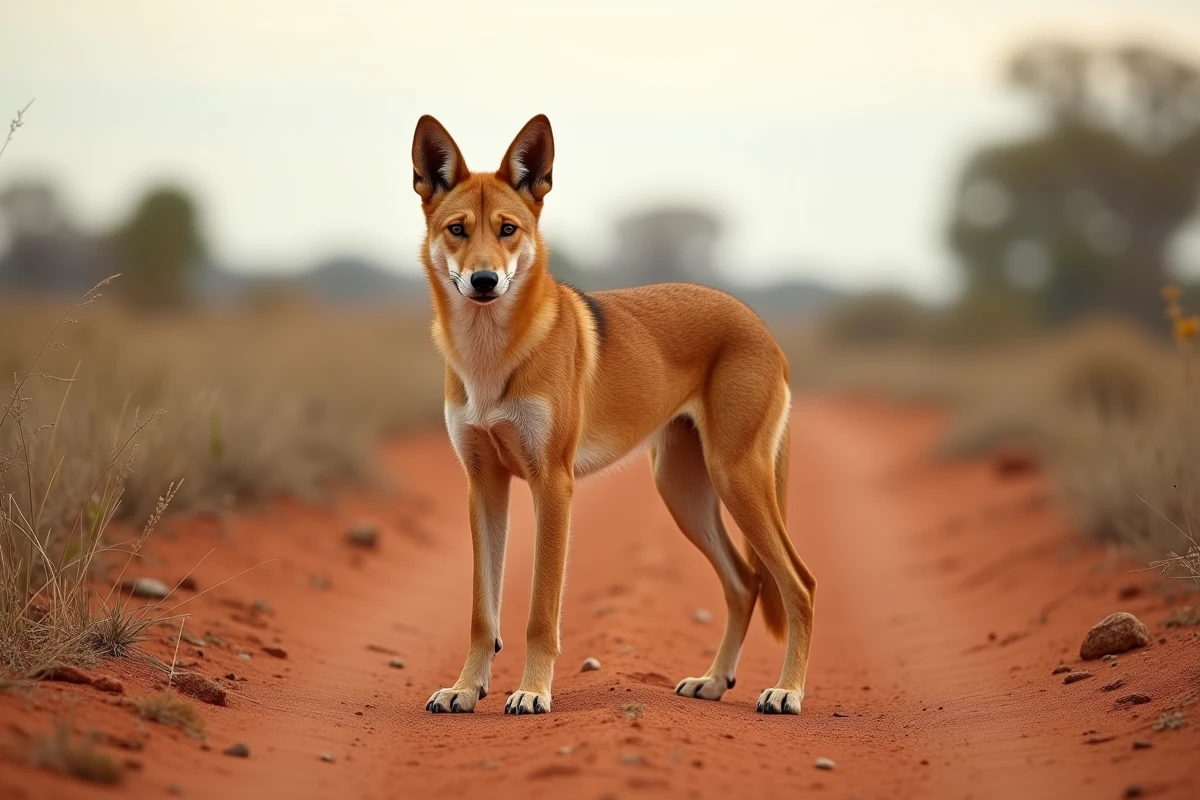
In Australia, the law prohibits the possession of a dingo as a pet in most states. Despite a striking resemblance to the domestic dog, this species is subject to strict measures, oscillating between protection and regulation. Considered both a key predator and a threat to livestock, the dingo occupies an ambiguous place in the Australian ecosystem. Its future depends as much on the preservation of its habitat as on population management policies.
The dingo, a wild emblem of Australia
No need to traverse the bush to grasp the aura of the dingo. Present on the continent for several millennia, this wild dog from Southeast Asia belongs to a distinct lineage: Canis lupus dingo. At the intersection of myth and science, this species has woven a unique identity, shaped by a singular evolution away from domesticated canids.
For many Australian Indigenous communities, the dingo occupies much more than an animal role. It is deeply rooted in the stories of Dreamtime, as well as in tales of territory, survival, and mutual respect with nature. The National Museum of Australia highlights this ancestral link, a testament to a coexistence marked by fascination and a certain restraint.
Click here to discover the Australian dingo in all its facets: a discreet predator and a model of ecological resilience, this canid is found in both desert expanses and the humid forests of the north. Its influence extends far beyond its silhouette: it impacts the natural balance, shapes the fate of its prey, and prompts Australia to question its relationship with the living world.
How does the dingo live? Lifestyle, behavior, and habitat
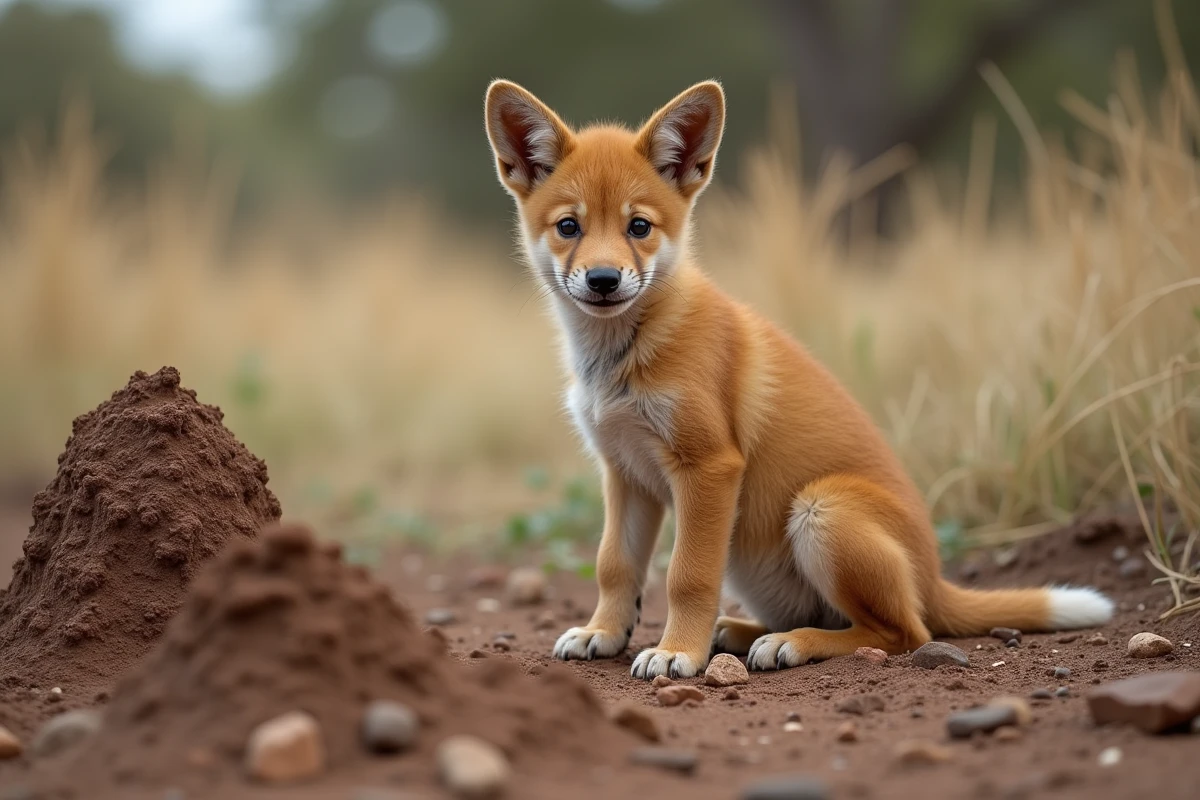
Observing the dingo is to understand wildlife in its most authentic form. This predator is anything but solitary: it lives in packs, usually structured around a dominant pair. Groups generally consist of between three and twelve members. The alpha female gives birth to her pups in safety, in a den, between two rocks, or in any discreet and secluded refuge.
Several fundamental aspects define the daily organization of the dingo:
- A social structure characterized by a hierarchy, where cooperation ensures the survival of the group
- Constant movements over kilometers in search of prey, water, or new territories
- Communications primarily based on howling, the dingo’s signature sound, which serves to strengthen pack bonds and alert neighbors to their presence
Its natural habitat covers vast and varied spaces: red deserts of the interior, savannas of Queensland, northern forests, semi-arid plains of the west. Areas like Tasmania and the southwest are rarely accessible to it, hindered by natural barriers and human interventions. On K’gari (Fraser Island), a so-called “pure” population remains, the subject of scientific studies and targeted conservation programs.
The young are not safe from the perils of the bush: eagles and snakes are among the threats, reminding us that the cycle of life plays out daily in a continuous tension between prey and major predators.
Preserving the dingo: survival challenges and importance for biodiversity
The presence of the dingo remains central to the functioning of Australian ecosystems. Today, the IUCN classifies it as a vulnerable species: the purity of its lineage is threatened by crossbreeding with domestic dogs, while the use of 1080 poison, the expansion of agriculture, and the immense Dingo Fence fragment populations.
On the ground, its impact is palpable: it regulates species such as kangaroos, wallabies, rabbits, or foxes, preventing certain animals from proliferating at the expense of fragile natural balances. The ecosystem becomes unbalanced whenever the dingo disappears from a region: drought increases, vegetation recedes, and animal populations become unstable.
Its role goes far beyond predation: it works silently to maintain a diverse and resilient environment. Various national parks, Purnululu, Sturt, Mungo, Cape York Peninsula, Simpson Desert, implement targeted protection for the dingo, while elsewhere it is hunted as soon as it approaches livestock.
Ensuring the future of the dingo means defending the entirety of Australia’s natural heritage. Because maintaining this balance gives the country a chance to preserve its uniqueness and that part of untamed wilderness that still floats, free, through red tracks and eucalyptus forests.