
We want a wall that catches the eye, with texture under the fingers, but we often encounter the same problem: commercial smooth paint offers no texture once dry. Adding sand randomly to a pot of acrylic results in an uneven surface, with areas that start to flake after a few weeks.
To achieve a true grainy effect in wall paint or on canvas, you need to choose the right filler, the right base, and especially the right application method.
Marble flour and mineral fillers: the grain that paint alone cannot provide
The most common reflex for texturing paint is to pour in construction sand. The result is rarely satisfactory: the grains are too large, they settle at the bottom of the pot, and the finished surface resembles more of a stucco than a decorative finish. A much more controlled result can be achieved with fine mineral fillers like marble flour.
This product, available at craft stores and from some decorative paint suppliers, comes in the form of white powder with varying granularity. French manufacturers of decorative coatings recommend adding it to acrylic paint for wall or canvas use, with technical data sheets specifying dosages according to the desired grain.
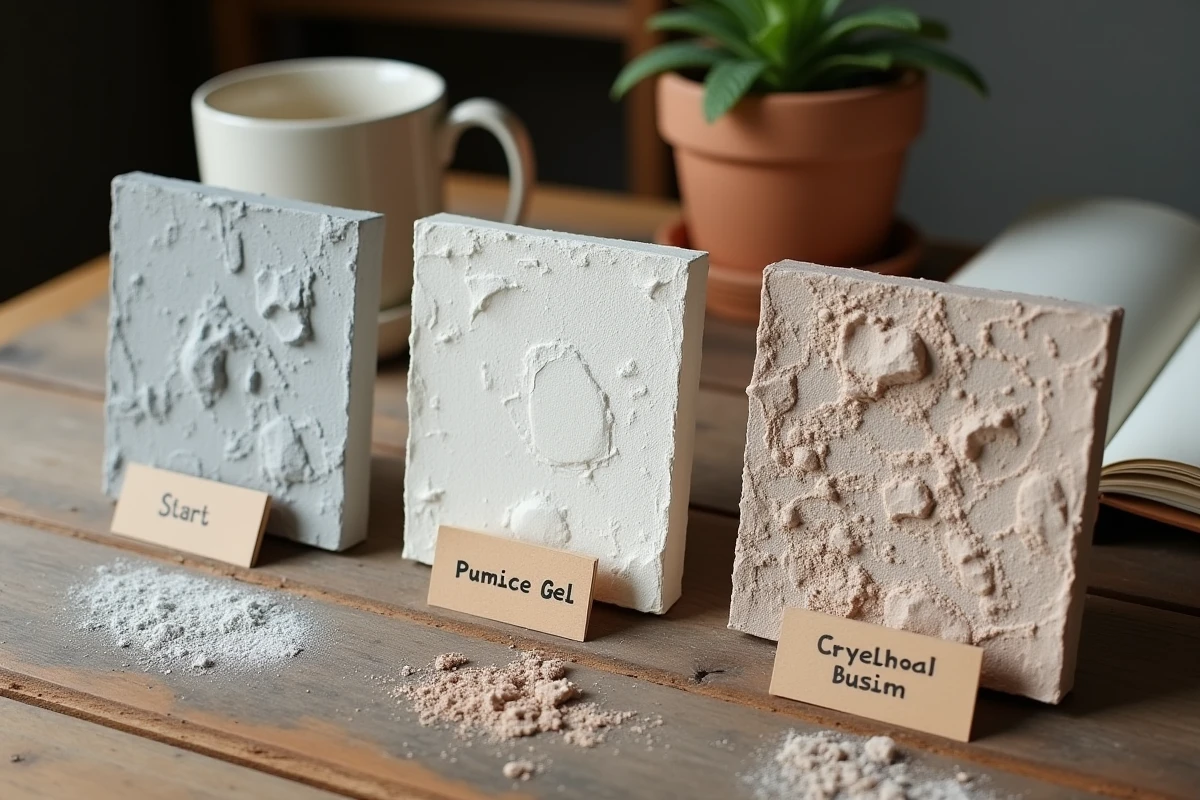
Pumice powder works on the same principle, with a slightly more angular grain that provides a rougher texture. The filler is mixed into the acrylic paint before application, gradually incorporating it to avoid lumps. The idea is to achieve a thick paste consistency, not a grainy liquid that would run down the wall.
Before tackling an entire surface, it is advisable to test the mixture on a rigid cardboard or a scrap of drywall. This is the only reliable way to check the grain size, adhesion, and finish once dry. To delve deeper into proportions and variations, several guides detail how to create a grainy effect in paint using different mineral fillers.
Baking soda and everyday materials: budget-friendly grainy textures
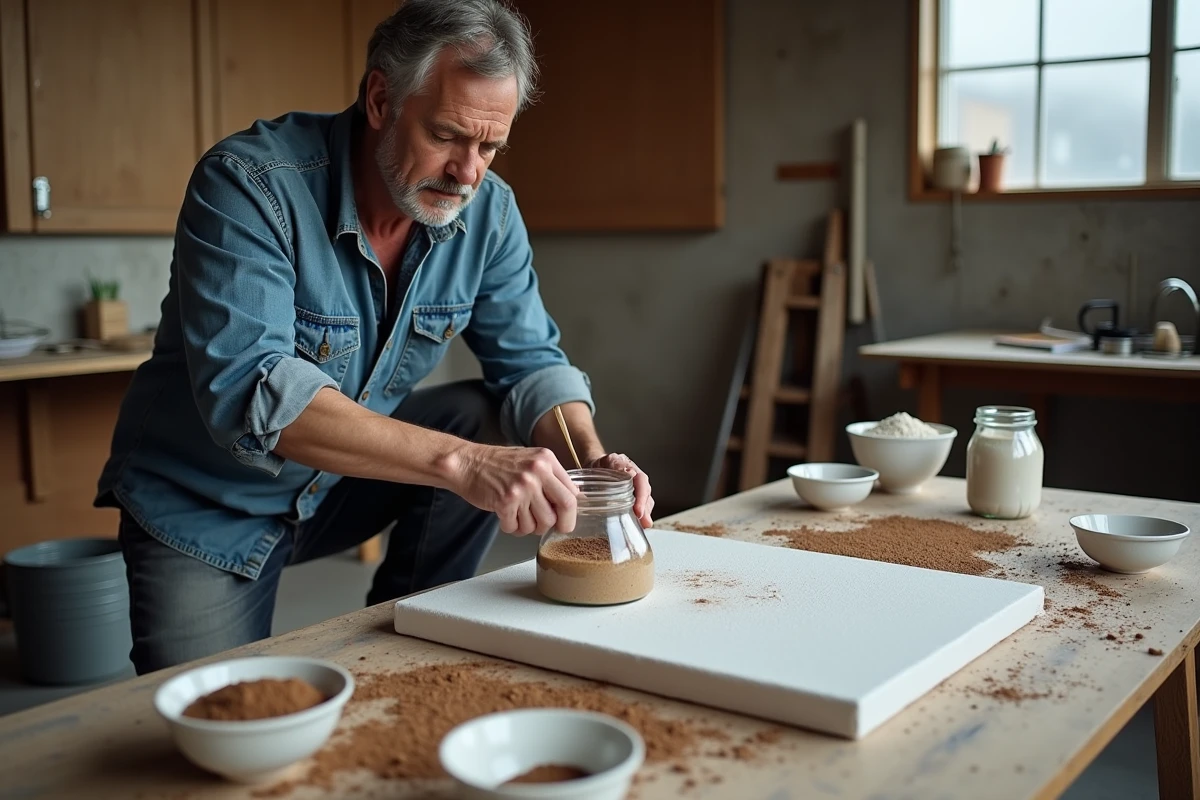
When you don’t have marble flour on hand, baking soda offers a surprising alternative. Mixed with acrylic paint, it produces a fine and even grain that holds well after drying. The baking soda partially dissolves in the wet paint, creating micro-reliefs rather than a coarse sprinkling.
The technique is simple: add the baking soda spoon by spoon into the pot, stirring between each addition. Too much baking soda and the paint loses its cohesion, too little and the effect remains invisible. Feedback varies on this point depending on the type of acrylic used, so a prior test remains the best approach.
Other materials to test for varying textures
Baking soda is not the only accessible option. Several common materials produce distinct grainy effects:
- Dry coffee grounds, incorporated into the paint, provide an irregular grain and a slightly warm hue that works well on earth or beige tones
- Fine salt, sprinkled on the still-wet paint and then removed after drying, leaves micro-craters that mimic a natural sandy effect
- Very fine wood shavings, sifted and mixed with acrylic, create an interesting organic relief on small surfaces or decorative frames
Each of these materials has its limits. Coffee grounds can mold if the layer is thick and poorly ventilated. The shavings absorb a lot of paint and alter the final color. Testing on a sample before treating an entire wall remains the golden rule.
Ready-to-use textured paints: when homemade mixtures aren’t enough
For those who prefer to avoid artisanal dosages, ready-to-use textured wall paints have multiplied in recent years. Recent renovation guides now distinguish them from classic paints in their cost estimates, indicating that demand has significantly increased in interior renovation.
You can find finishes with a sandy effect, a concrete effect, or a grainy coating, each with factory-calibrated granularity. The main advantage: the consistency of the grain is guaranteed from one wall to another. With a homemade mixture, reproducing exactly the same dosage across multiple pots is quite a challenge.
Application with a roller or trowel
The choice of tool radically changes the finish. A long-haired roller applies the material in a thick layer with a pronounced grain. A stainless steel trowel, used in cross movements, slightly flattens the reliefs and gives a smoother appearance, similar to tadelakt or stucco.
On a standard wall, start with a classic primer, then apply the textured paint in one or two coats depending on the desired thickness. Do not go over an area that is starting to dry: this is the main cause of visible marks and uneven thicknesses.
Precautions before painting a wall with a grainy effect
A textured effect masks certain imperfections of the wall, but it accentuates others. An active crack under a grainy coating will eventually reappear. A damp wall will cause the loaded paint to blister even faster than smooth paint, because the layer is thicker and dries less evenly.
Before any application, check that the surface is sound, dry, and dust-free. On new drywall, a primer is essential to prevent the mineral filler from absorbing moisture from the substrate and peeling off.
- Lightly sand the wall with fine grit to create adhesion, especially on surfaces already painted in satin or gloss
- Protect the baseboards and frames with wide masking tape, as textured paint splatters more
- Allow for a longer drying time than with classic paint, especially in poorly ventilated rooms
Recent acrylic paints mention in their safety data sheets that adding fillers not specified by the manufacturer can alter the properties of the product. On a living room or bedroom wall, the risk remains limited. In a damp room like the bathroom, it is better to stick to products formulated for that use.
The grain also changes daily maintenance. A textured surface retains more dust than a smooth wall and is less easily cleaned with a sponge. This is a detail that is often forgotten when choosing a finish, but it matters in the long run.