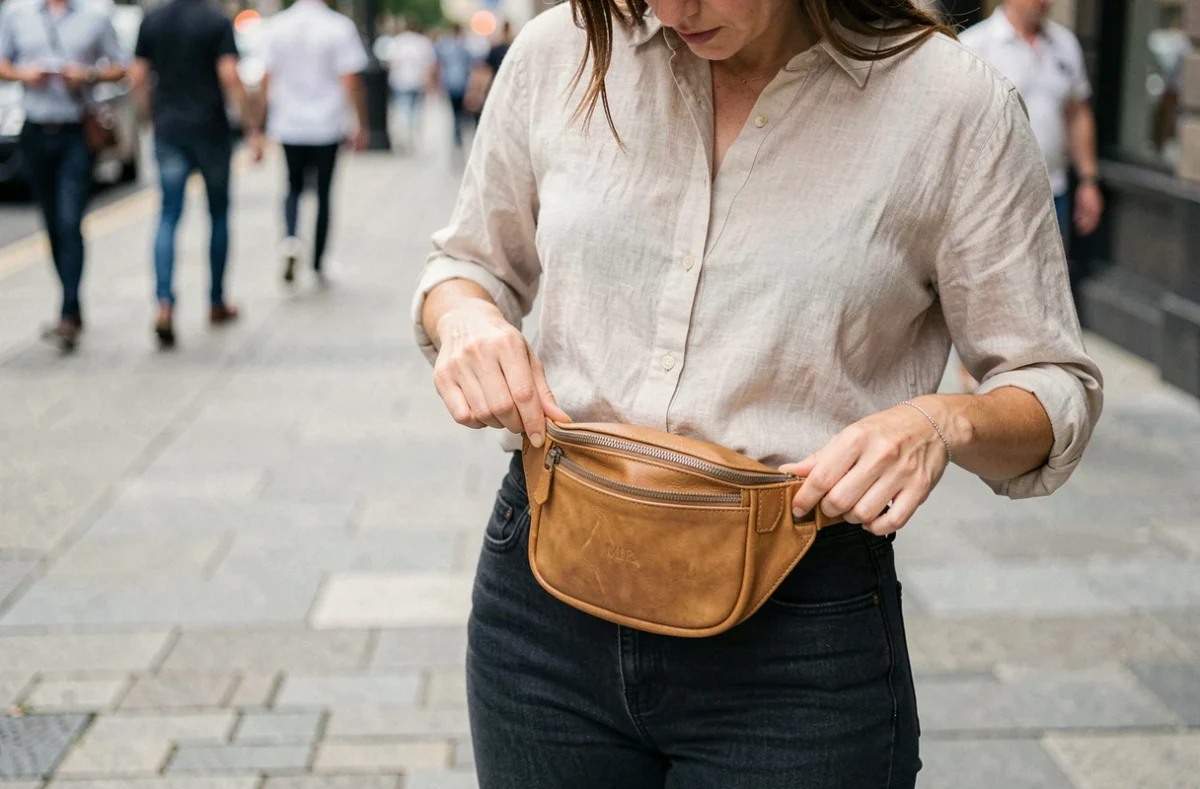
The strap of a fanny pack alone determines the comfort of wearing, the stability of the bag, and its position on the body. Its useful length corresponds to the total distance between the two ends of the closure loop, once the bag is closed and pressed against the wearer. Choosing the right strap size involves balancing three variables: waist or bust measurement, the intended wearing style, and the thickness of the clothing worn.
Adjustment buckle and strap sliding: the often-overlooked technical point
Before even discussing centimeters, one parameter conditions the reliability of any measurement: the hold of the buckle under load. A perfectly adjusted strap can gradually loosen if the buckle allows the webbing to slip due to the repeated movements of walking or running.
To check this point, simply load the bag with its usual contents, close it, and then pull sharply on the strap several times. If the buckle moves back more than one notch, the adjustment will not hold over time. This simple test avoids confusing a length issue with a mechanical hold defect.
Determining the ideal size of a fanny pack therefore requires first validating that the tightening system remains stable before focusing on body measurements.
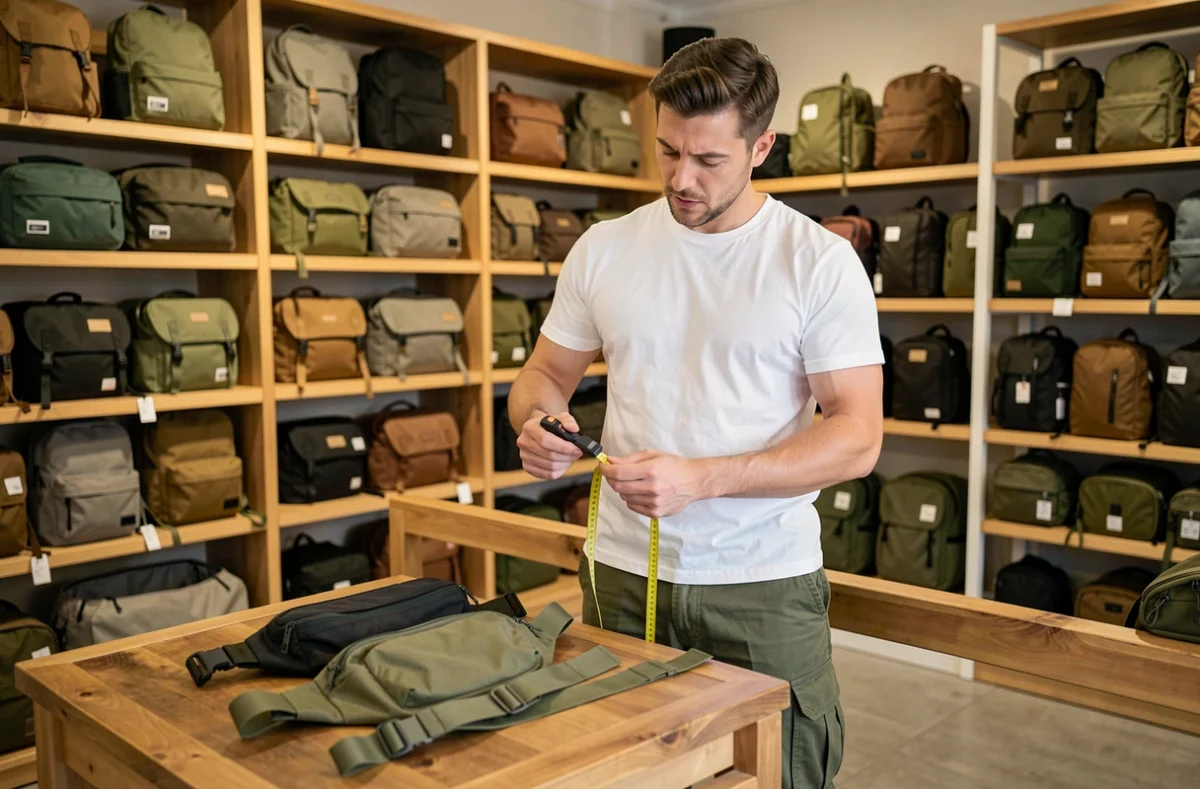
Waist measurement, bust measurement: measuring the right circumference according to wear
The necessary strap length varies significantly depending on where on the body the bag will be worn. There are three main scenarios, each requiring a different measurement.
Worn at the waist or on the hip
This is the classic carry. The reference measurement is the waist circumference at the level of the navel, taken with a measuring tape without tightening. The strap should exceed this measurement by a few centimeters to allow for comfortable adjustment and let the bag rest slightly on the hip rather than compressing the abdomen.
Worn crossbody
The bag crosses the bust, from the opposite shoulder to the hip. The relevant measurement here is the diagonal from shoulder to opposite hip. This diagonal is significantly longer than the waist circumference, meaning a strap calibrated for hip wear will be too short for crossbody use.
Worn crosswise on the back
This position requires a specific adjustment that limits the bag’s movement. The length suitable for waist wear does not guarantee satisfactory support on the back, as the bag tends to bounce without direct contact with the wearer’s line of sight. A slightly shorter adjustment than for the front crossbody stabilizes the bag against the shoulder blades.
Adjustment range and clothing thickness: anticipating seasonal variations
One point that most size guides overlook: the adjustment must be tested with the actual clothing worn. A comfortable length over a t-shirt in summer may become insufficient over a thick coat in winter.
For a fanny pack intended for year-round use, the strap’s adjustment range must cover both extremes. Specifically, this means checking two things:
- The minimum adjustment (shortest strap) allows for a snug fit over light clothing without compressing the torso.
- The maximum adjustment (longest strap) leaves enough room to go over a puffer jacket or thick coat without straining the buckle.
- Between the two positions, at least two to three intermediate adjustment notches should remain available for mid-seasons.
If the strap is sold in a one-size-fits-all without indication of range (minimum and maximum length), measuring its total unfolded length and comparing it to the widest body circumference, including winter clothing, remains the most reliable method.
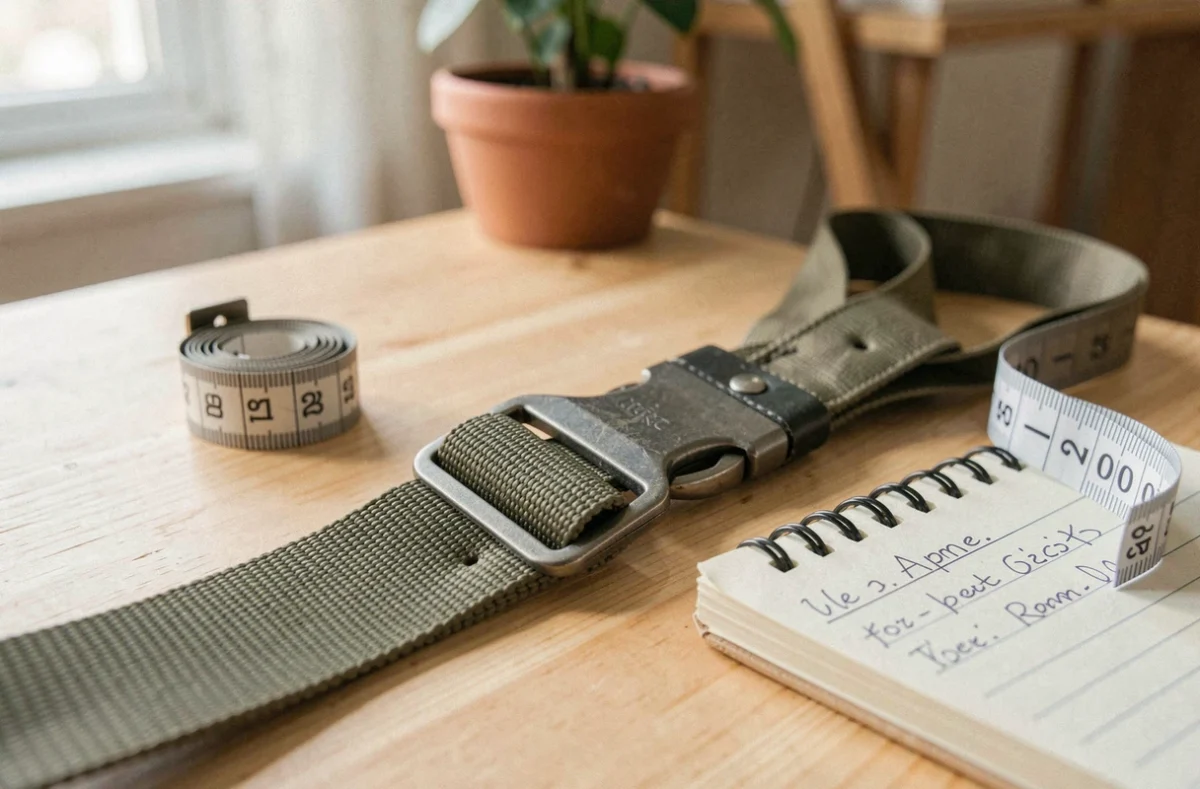
Strap width and wearing comfort: a criterion related to the weight carried
The width of the strap does not change the necessary size, but it directly influences the comfort sensation once the bag is loaded. A narrow strap concentrates pressure on a fine line of skin, which becomes uncomfortable as soon as the contents exceed a certain weight.
For light use (phone, keys, wallet), a thin strap is sufficient. For heavier use (water bottle, compact camera, external battery), a wider strap distributes pressure better on the shoulder or hip.
The material also plays a role: a woven nylon strap grips more on clothing than a smooth polyester strap, which limits slipping but can irritate the skin in direct contact in hot weather. This material choice is independent of length but alters the overall comfort perception.
Testing the loaded strap: the only check that matters
A common mistake is to try on an empty fanny pack in-store or upon receiving an order. A filled bag pulls more on the strap than an empty one, which alters both the position of the bag on the body and the tension felt at the buckle.
The most reliable test is to fill the bag with daily contents, then wear it for about ten minutes while walking. Three points deserve verification:
- The bag stays in the chosen position without sliding down.
- The buckle has not moved back a notch under the weight.
- No areas of friction or excessive pressure appear on the hip, belly, or shoulder.
Distributing the contents in the bag rather than concentrating them on one side also helps stabilize the whole. A heavy object placed in the center of the main compartment keeps the center of gravity close to the body.
The correct strap adjustment is not the one that seems right at fitting, but the one that holds after half an hour of active wear with the actual load. This check takes little time and avoids regretting a purchase or having to replace a strap that is too short a few weeks later.